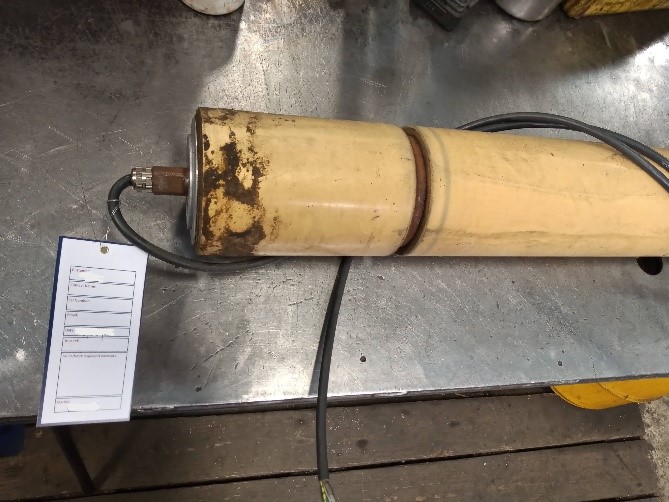
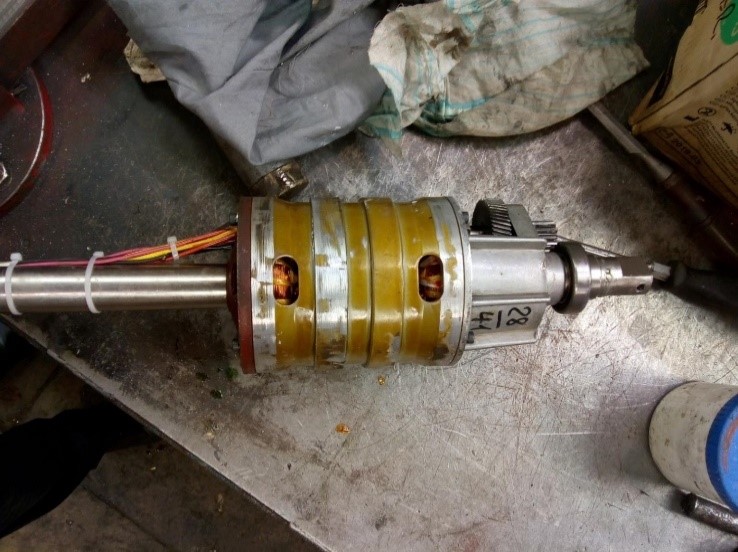
Used extensively wherever you find conveyors drum motors are a great way to save space in drives.
But, come the time for repair or replacement, with so many configurations, covering materials and sizes it can often be difficult to obtain the replacement drum motor quickly as most are made to order items.
At our Grantham and Peterborough workshops we are able to service and repair all makes of drum motors. Even where units are rubber coated we are able to effect rewind and repairs quickly and efficiently.
We keep spares for many of the well-known manufacturers to speed up the repair process. Where rubber coatings are too heavily worn to be reused we also offer a recoating service to bring your old roller back to the original specification.
To help ensure IP ratings are kept to the highest level we use rubber epoxy resins in the terminal box to help prevent water ingress.
Once reassembled we use food grade oil, where required, to ensure compliance with food industry regulations and all units are run test prior to despatch so you can be assured that your drum motor will run on site as it did when new.
Contact us today to discuss your roller requirements and how we can help!
Check our FAQs and see if your question has already been answered. Still not found what you’re looking for? Head over to our contact page.
Most can be repaired. Because the motor and gearbox are sealed inside the drum, people often assume failure means a new unit. In practice bearings, seals, internal gearing and windings can all be replaced at a fraction of the replacement cost.
The cylindrical roller at either end of a conveyor. The drive drum turns the belt, the tail drum guides and tensions it. A drum motor is a drive drum with the motor and gearing inside the shell.
The drum is opened, the internal motor and gear train stripped, and every component measured. Bearings and seals are replaced as standard, worn gears and shafts replaced or machined, then the unit is rebuilt, refilled, resealed and run tested.
A failed shaft seal in nearly every case, often triggered by bearing wear allowing shaft movement. It is worth stopping the conveyor and repairing rather than topping up, because the internals wear fast once the oil is low.
Heat degrades the internal winding insulation and thins the oil, so wear accelerates on both sides at once. Repeated overload trips on a conveyor drive should be investigated rather than reset.
Belt overload, an undersized unit for the duty, a seized idler adding drag, low oil level, or material build up blocking airflow around the shell. All are worth checking before condemning the drive.
Rumbling or grinding audible through the shell, rising vibration in the conveyor frame, the drum running hot, or belt speed becoming inconsistent under load. Caught early it is a bearing job rather than a rebuild.
Less than replacement in almost every case, but the figure depends on what is worn inside. We strip, inspect and quote before any repair work starts.
Yes. Worn or damaged lagging causes belt slip and tracking problems, and it can be renewed during an overhaul while the unit is already stripped, which saves a second visit.
Yes. Drum motors are heavy and awkward, so tell us the location and the access when you call and we will arrange collection.
On a production critical conveyor, generally yes. Many customers run a repaired unit as the shelf spare and rotate them, which turns a breakdown into a swap rather than a shutdown.
Well specified units run for many years. Early failure almost always traces back to being undersized for the actual load, run overloaded, or left running after an oil leak started.
A Division of:

Registered in England And Wales – 415925
Registered address: Harlaxton Road, Grantham, Lincolnshire, United Kingdom, NG31 7SF
Registered for VAT: 610 425 096
Copyright ©Grantham Engineering Ltd