When a gearbox fails, the expensive part is rarely the gearbox. It is the line sitting idle while you wait for it.
We handle industrial gearbox repair from our workshops in Grantham and Peterborough, and we work to the timescale your plant needs rather than the one that suits us. We have been repairing electro-mechanical equipment for close to 80 years. Gearboxes reach us from food production, quarrying and aggregates, water treatment, recycling, packaging and general manufacturing. Some arrive on a pallet with a note taped to the top. Some we collect the same morning because the plant is down.
Both sites are set up for the same work, so where your unit goes comes down to what is quickest for you. Between them we cover Lincolnshire, Cambridgeshire, the East Midlands and East Anglia, with free local collection and delivery. More on gearbox repair across Lincolnshire and the East Midlands.
Being able to strip a gearbox and rewind the motor that drives it under one roof matters more than it sounds. A failed gearbox often takes the motor with it, or the motor was the reason the gearbox failed in the first place. Send the two halves to different suppliers and you get two diagnoses, two lead times, and nobody looking at the drive as a whole. We do both, alongside motor rewinds and repairs and pump repair.
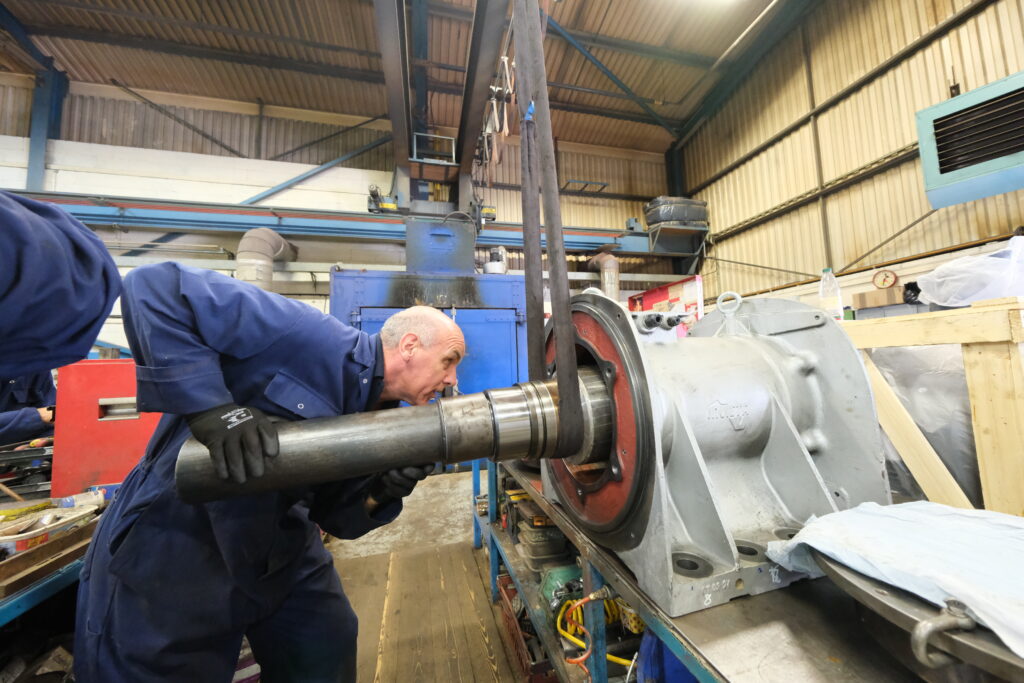
We work on all makes and models, including obsolete units the manufacturer no longer supports. What comes through the doors most often:
If the unit is unbranded, ancient, or has already been repaired badly by somebody else, that is a normal Tuesday here. Where a gear or shaft is no longer available anywhere, we can make one, using our custom machined parts capability.
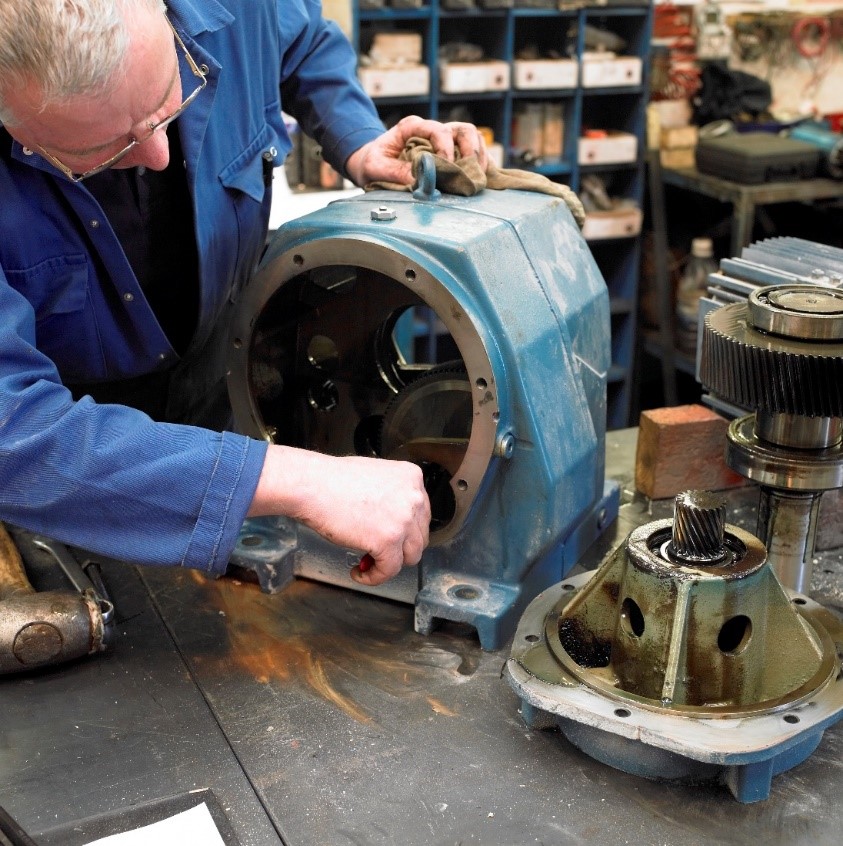
The unit is dismantled into its component parts by our time served engineers, cleaned, and examined properly. Bearings, gears, shafts, seals and the housing all get checked. Until a gearbox is stripped, anyone telling you what is wrong with it is guessing.
You get a written report setting out what we found and how long the work will take. Where it is useful we also look at a new equivalent unit, so you can weigh repair against replacement on facts rather than assumptions. Nothing is repaired until you have agreed it.
Where replacement gears, shafts or bearings are needed, we use original manufacturer parts wherever we can get them. Where we cannot, because the unit is obsolete or the lead time is unworkable, we manufacture to the original specification in house.
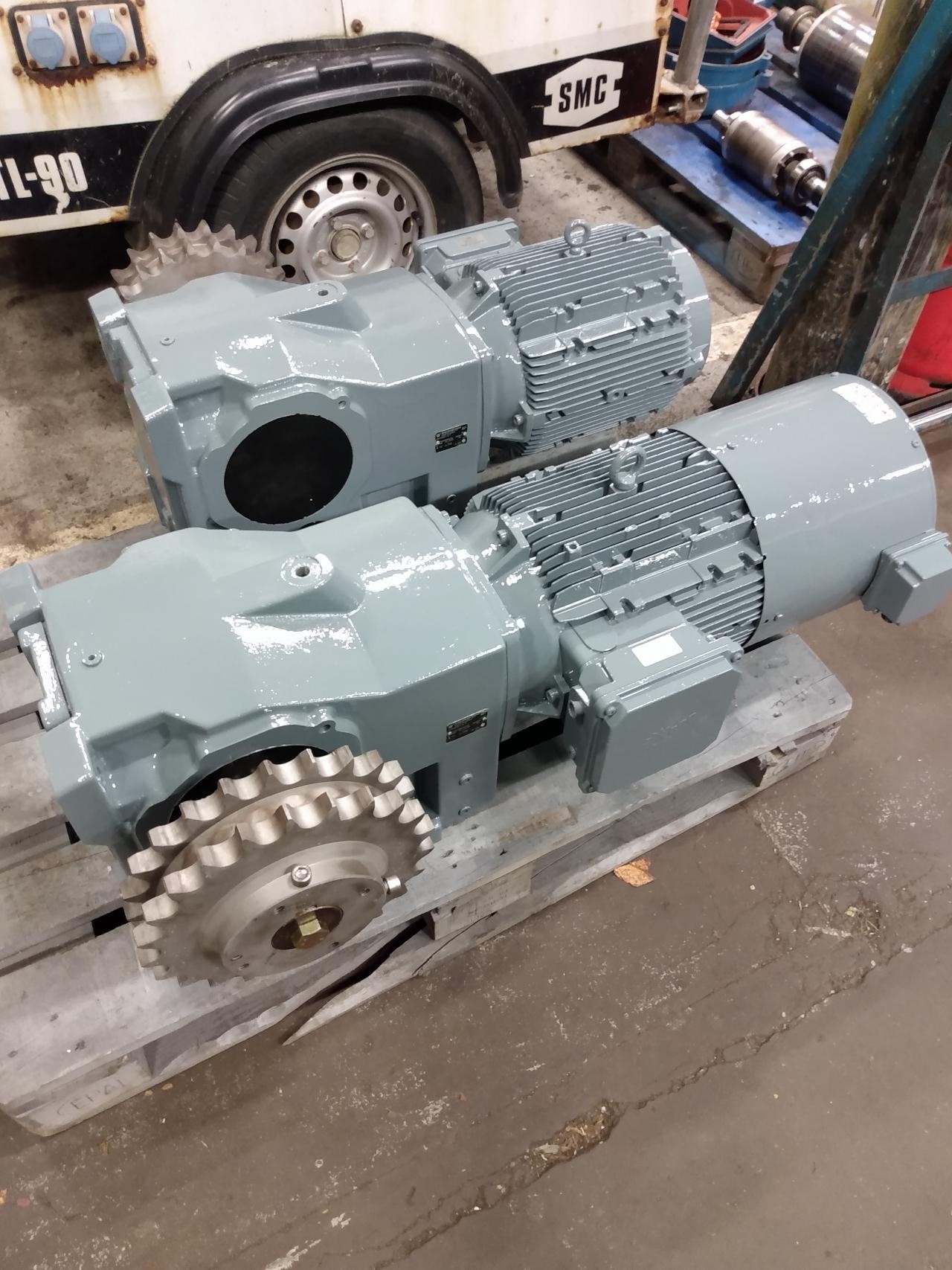
The gearbox is reassembled, filled and run tested coupled to an electric motor before it goes anywhere. It is then painted and returned to your site. You get the unit back working, not the unit back with our fingers crossed.
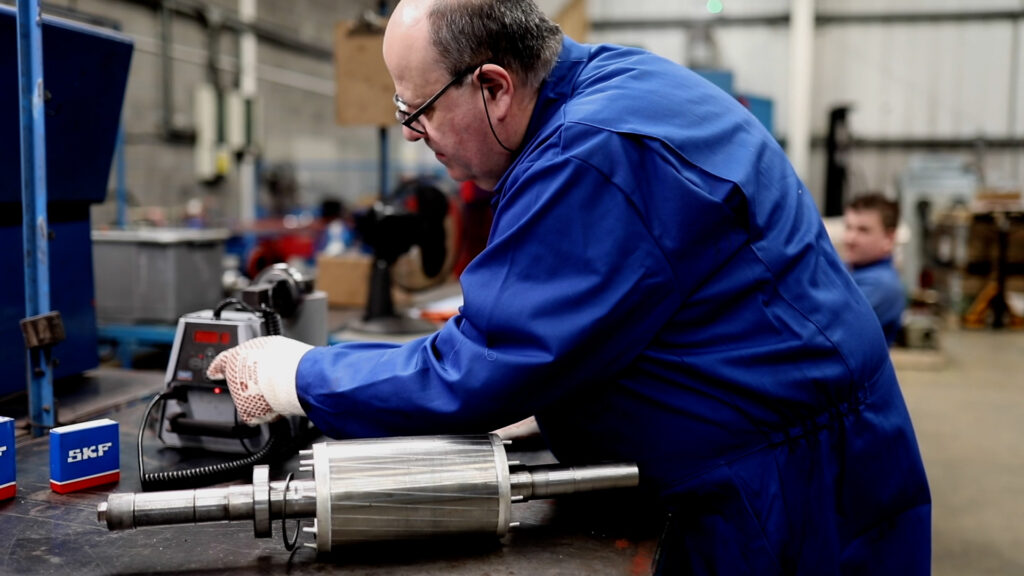
Most industrial gearbox failures come back to a handful of causes, and most give warning first.
Lubrication is behind more of them than anything else. The wrong oil, a low level, or oil that has degraded or taken in water and metal particles. Bearings go first, and a failed bearing takes the gear teeth with it soon after.
Seals are next. A weeping output seal looks like nothing at the time. Left alone it empties the box.
After that it tends to be mechanical. Misalignment and worn couplings put loads through the gearbox it was never designed to carry. Shock loading on conveyors and crushers chips or cracks teeth outright. Some units have simply done their time, with gears worn to the point where backlash and noise become obvious.
The warning signs are much the same in each case. Noise, heat, vibration, or oil where it should not be. A gearbox that has started whining or running hot is telling you something well before it stops.
For large, obsolete or non standard industrial gearboxes, repair is normally the practical route. It avoids the manufacturer’s lead time, which on some units runs to months, and it keeps a drive in service that was built for the duty you are running. We have written in more detail about what a gearbox repair involves and what it costs.
For small standard gearboxes it can go the other way. If a new unit is available quickly, replacement is sometimes the sensible answer and we will tell you so. We supply new gearboxes and geared motors as well as repairing them, so we have no reason to steer you either way.
The other thing worth weighing is spares cover. Even where you decide to replace, having the old unit refurbished and sitting on a shelf as a spare is usually worth doing. The second failure is the one that really hurts.
When a failure has stopped production, say so when you ring, or send us the details and we will arrange collection. We can collect, strip and assess quickly, and we will be straight with you about what is achievable. Where a same day turnaround is possible we will say so on the phone. Where a part has to be made, you will know that on day one rather than day ten, and we will look at what can keep you running in the meantime.
Most of the failures above are avoidable, and oil is the simplest maintenance there is.
Follow the manufacturer’s stated interval, usually given in running hours, and treat oil condition as the trigger in between. Discoloured, milky or gritty oil means change it now, whatever the hour meter says. On critical drives an annual oil sample is worth doing, because metal particles turn up in the analysis long before they turn up as noise.
We can set up planned servicing across your site so the drives that matter get looked at on a schedule instead of after they fail.
Food and drink production, quarrying and aggregates, water and waste treatment, recycling, packaging, agriculture and general manufacturing. Each brings its own version of the same problem. A drive in an awkward position, running a duty it was never quite specified for, that nobody can afford to lose for long.
We are associate members of the Association of Electrical and Mechanical Trades, the recognised body for the electro-mechanical repair industry in the UK.


Check our FAQs and see if your question has already been answered. Still not found what you’re looking for? Head over to our contact page.
Lubrication. Either the wrong oil, a low level, or oil that has degraded or been contaminated with water and metal particles. Bearings then fail, and a failed bearing takes the gear teeth with it. Regular oil checks catch most of it long before that point.
It depends entirely on what is worn inside, which is only known once the unit is stripped. Bearings and seals are a modest job. Replacing gear sets costs considerably more. We strip, inspect and quote before any repair work is carried out.
Compared with replacing it, usually not. For large, obsolete or non standard industrial gearboxes a repair is normally a fraction of the replacement price and avoids the manufacturer lead time. Small standard units can go the other way, and we will say so.
Meshing gears of different sizes trade speed for torque. A small input gear driving a larger output gear reduces speed and multiplies torque by the same ratio. The housing holds the shafts in alignment and retains the oil that lubricates and cools the gear teeth.
Follow the manufacturer's stated interval, typically stated in running hours, and treat oil condition as the trigger in between. Discoloured, milky or gritty oil means change it now regardless of the hour meter. An annual oil sample analysis is a cheap early warning.
Well maintained industrial gearboxes commonly run for decades. What shortens that is shock loading, misalignment, overloading and neglected oil. Age on its own is rarely the reason a gearbox comes into the workshop.
Removal and refitting is the significant part, particularly on conveyor and process plant where access is tight. That is one reason a workshop repair often makes sense: if the unit has to come out anyway, rebuilding it costs less than buying new.
A worm gearbox uses a screw like worm driving a toothed wheel at right angles. It gives a high reduction ratio in a compact housing and a degree of self locking, which is why it is common on conveyors, hoists and mixers.
Lower efficiency than helical gearing, because of sliding contact between worm and wheel, which means more heat. They also need the correct oil specification and the wheel wears in service. Against that they are compact, quiet and often self locking.
Our Grantham and Peterborough workshops both rebuild industrial gearboxes, covering Lincolnshire, Cambridgeshire and the East Midlands. Collection can be arranged where the unit is heavy or awkward to move.
Reconditioning goes beyond a repair. The unit is stripped and cleaned, every component measured, bearings and seals replaced as standard, worn gears and shafts replaced or machined, then rebuilt, refilled and run tested to return it to as new condition.
Yes, and it usually makes sense. When a geared motor comes in with a failed gearbox we test the motor at the same time, so you are not back a month later with a burnt out winding on a freshly rebuilt unit.
A Division of:

Registered in England And Wales – 415925
Registered address: Harlaxton Road, Grantham, Lincolnshire, United Kingdom, NG31 7SF
Registered for VAT: 610 425 096
Copyright ©Grantham Engineering Ltd