
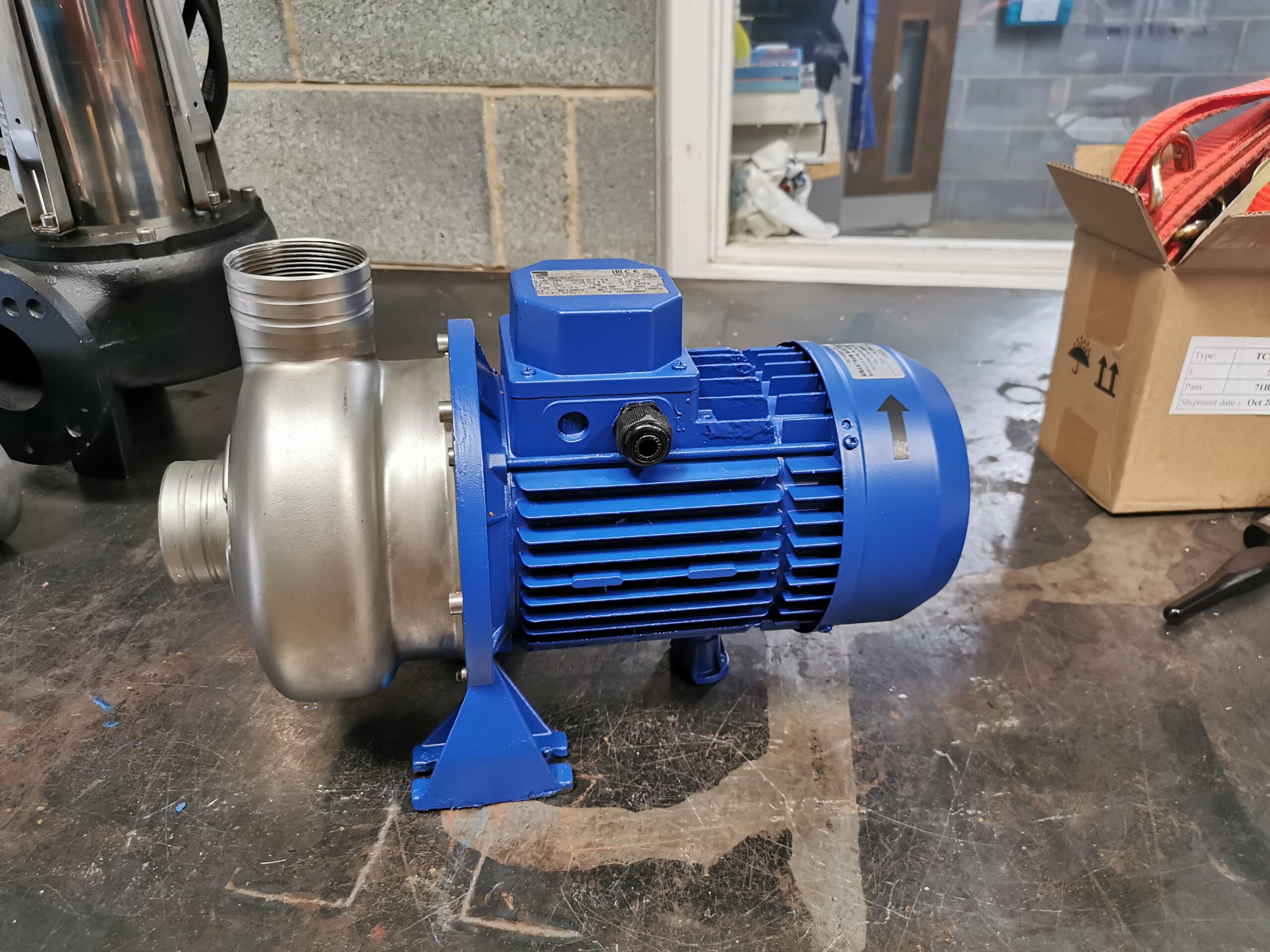
An electric motor rarely fails without warning. Long before it stops, it usually gives off a series of clues: a change in sound, a rise in temperature, a new vibration or a smell that was not there last week. The maintenance teams that spot these early are the ones that book an electric motor repair on their own terms, during planned downtime. The ones that miss them end up with an unplanned breakdown in the middle of a shift.
This post sets out the five most reliable warning signs that a motor needs attention, explains what each one usually means, and shows how acting early turns a potential catastrophe into a routine repair. It is drawn from the failures we see day in, day out across industrial plant in the region.
The value of these warning signs is that they are cumulative and readable. A motor rarely jumps from healthy to failed in a single step, and the teams that walk their plant with eyes and ears open catch problems while they are still cheap to fix. None of this requires expensive equipment, though condition monitoring adds a further layer on critical drives. It requires only the habit of noticing when a motor sounds, feels, smells or performs differently from how it did last week, and the discipline to act on what you notice rather than hoping it settles down on its own.
1. Unusual Noise or Vibration
Sound is one of the earliest and most useful diagnostic tools you have. A motor that suddenly becomes louder, or develops a grinding, humming or knocking note, is telling you something.
What noise and vibration usually mean
Grinding and rumbling frequently point to failing bearings, which are the most common single cause of motor failure. Excessive vibration can indicate a bent shaft, worn bearings, imbalance or misalignment with the driven load. Left alone, a failing bearing eventually destroys itself and can damage the shaft and windings with it.
Why early action pays
A bearing replacement caught early is a quick, inexpensive job. The same bearing left to collapse can turn into a full rewind or a scrapped motor. Listening to your plant, or using vibration monitoring on critical drives, is one of the highest-return maintenance habits there is.
2. Overheating
A motor that runs too hot is a motor on borrowed time, because heat is the enemy of winding insulation.
Common causes of overheating
Overheating can stem from overloading, poor ventilation, a blocked cooling fan, an electrical supply problem such as voltage imbalance, or bearing friction. Every ten degrees of excess temperature roughly halves the life of the insulation, so persistent heat is never trivial.
What to do about it
If a motor is too hot to touch or is tripping on thermal overload, it needs investigating before the windings are damaged beyond a simple repair. Catching the cause early can save the windings entirely.
3. Tripping, Stalling or Failing to Start
Electrical symptoms are just as telling as mechanical ones.
A motor that repeatedly trips its protection, struggles to start or stalls under load is signalling a real problem. The cause might be an electrical fault in the windings, a supply issue such as single phasing, a failing capacitor on a single phase motor, or a mechanical load that has become too heavy because of a seizing bearing or gearbox. Ignoring repeated trips risks a burnt-out winding, so each trip deserves investigation rather than a simple reset.
4. Visible Damage, Smells or Leaks
Your senses catch a great deal on a simple walk round.
A burning smell is a serious warning of overheating windings and should never be ignored. Scorch marks, a tripped and blackened terminal box, oil or grease leaks, and visible cracks or corrosion all indicate a motor in trouble. Contamination from a leaking seal or a wash-down process can also work its way into the windings and cause insulation failure over time. Any of these signs warrants a closer look before a minor issue becomes a stoppage.
5. Declining Performance
Sometimes the sign is subtle: the motor still runs, but not as it should.
If a drive is slower than it used to be, cannot reach full speed, draws more current than normal or delivers less output, something is wearing. Falling performance often precedes outright failure by weeks, giving you a valuable window to plan a repair. Tracking motor current and output over time makes this kind of gradual decline much easier to spot.
Why Catching These Signs Early Matters
Every one of these warning signs represents a choice between a planned repair and an unplanned breakdown. A motor repaired during scheduled downtime costs a fraction of one that fails mid-production and takes a line down with it.
Acting early also protects the motor itself. A bearing caught in time saves the windings; windings caught before they burn out save the core; a sound core keeps a rewind viable. The longer a fault runs, the more of the motor it damages and the more expensive the repair becomes. Our electrical motor repair and servicing team diagnoses the root cause rather than just treating the symptom, and where a motor has already failed our repairs and rewinds capability can often return it to service quickly.
Common Questions About Electric Motor Repair
These are the questions maintenance teams ask most about spotting motor trouble.
Can I keep running a motor that shows warning signs?
You can, but it is rarely wise. Every warning sign, whether noise, heat, tripping or a burning smell, marks the point where a cheap, planned repair is still possible. Running the motor on risks turning that into an unplanned breakdown, and often a more expensive one, as a failing bearing damages the shaft and windings around it.
The sensible approach is to plan a repair during the next scheduled downtime rather than gambling on the motor lasting. A short, controlled stop almost always costs less than a sudden failure mid-shift.
What is the single most common cause of motor failure?
Bearings. They carry the entire rotating load and wear out before the windings or core, which is why noise and vibration are such valuable early warnings. A bearing caught early is a quick, inexpensive replacement, while one left to collapse can wreck the motor.
This is why so much preventive maintenance focuses on listening and feeling for bearing trouble, and why acting on it promptly gives the best return of any motor maintenance task.
Is a burning smell always serious?
Yes. A burning smell almost always indicates overheating windings, and it should never be ignored. By the time you can smell it, the insulation is already being damaged, so the motor needs to be isolated and investigated before the windings fail completely.
Catching a motor at the burning-smell stage can still save it if you act quickly, but continuing to run it usually leads to a full rewind or a scrapped motor.
Can you diagnose a motor without removing it from the machine?
Some checks, such as listening for bearing noise, feeling for heat and vibration, and inspecting the terminal box, can be done in place. A full diagnosis of an electrical or bearing fault, however, is usually best carried out in the workshop where the motor can be tested properly.
Our electrical motor repair and servicing team can advise on which checks are worth doing on site and when a motor needs to come in, so you are not removing a machine unnecessarily.
How can vibration monitoring help spot motor faults?
Vibration monitoring detects the tiny changes that precede a mechanical fault, often long before a person can hear or feel anything. On critical drives, it gives the earliest possible warning of developing bearing wear, imbalance or misalignment, which is exactly when a repair is cheapest and simplest.
For less critical motors, regular hands-on checks for noise, heat and vibration achieve much of the same benefit at lower cost. Either way, the aim is the same: catch the fault while it is still small, so the repair happens on your schedule rather than the motor’s.
What should I do the moment I notice a warning sign?
The safest response is to record what you have noticed, whether it is noise, heat, tripping or a smell, and to plan an inspection rather than ignoring it or running the motor to failure. Where the sign is a burning smell or repeated tripping, the motor should be isolated and investigated promptly, because these point to a fault that is actively damaging the machine.
Acting at this stage keeps your options open. A motor caught early can often be repaired simply, whereas the same fault left to develop frequently leads to a full rewind or a scrapped motor and an unplanned stoppage.
Conclusion
The five signs to watch are unusual noise or vibration, overheating, electrical tripping or stalling, visible damage and smells, and declining performance. None of them should be ignored, because each marks the point where a cheap, planned electric motor repair is still possible before a costly breakdown takes the decision out of your hands.
If your plant is showing any of these symptoms, do not wait for the motor to stop. Contact our team to arrange an inspection and keep a small problem from becoming a big one.

